
00LOADING
ONE MOMENT
Five services. Owner on site. Every job tracked and mapped.
We're a small contracting outfit working the Langeberg. Hay, spraying, spreading — the jobs that pile up when the rest of the farm is mid-harvest. Every machine carries a GPS unit, every job has the owner on site, and every job ends with a coverage map of where we've been and at what rate. That standard doesn't change between services.
Round-bale baling, done after your harvest is in.
We come in once your own harvester is parked. We bale to your spec — round bales, rate, and density to suit whether the bales are going to the dairy market or onto orchard rows as mulch. Acreage covered is logged on the tracker; speed and pattern are watched in real time so coverage stays even and nothing gets missed.
Fruit and wine farmers who run lucerne, oats, or grass blocks alongside the main crop and don't have the spare hours to bale during harvest. Dairy operations buying in fodder. Anyone needing mulch bales for orchard or vineyard floors.
A tracked-acreage record for the day or week, with timestamps and coverage map. Used by farmers for their own records, by managers for verification, and by buyers when bales are sold by area baled.
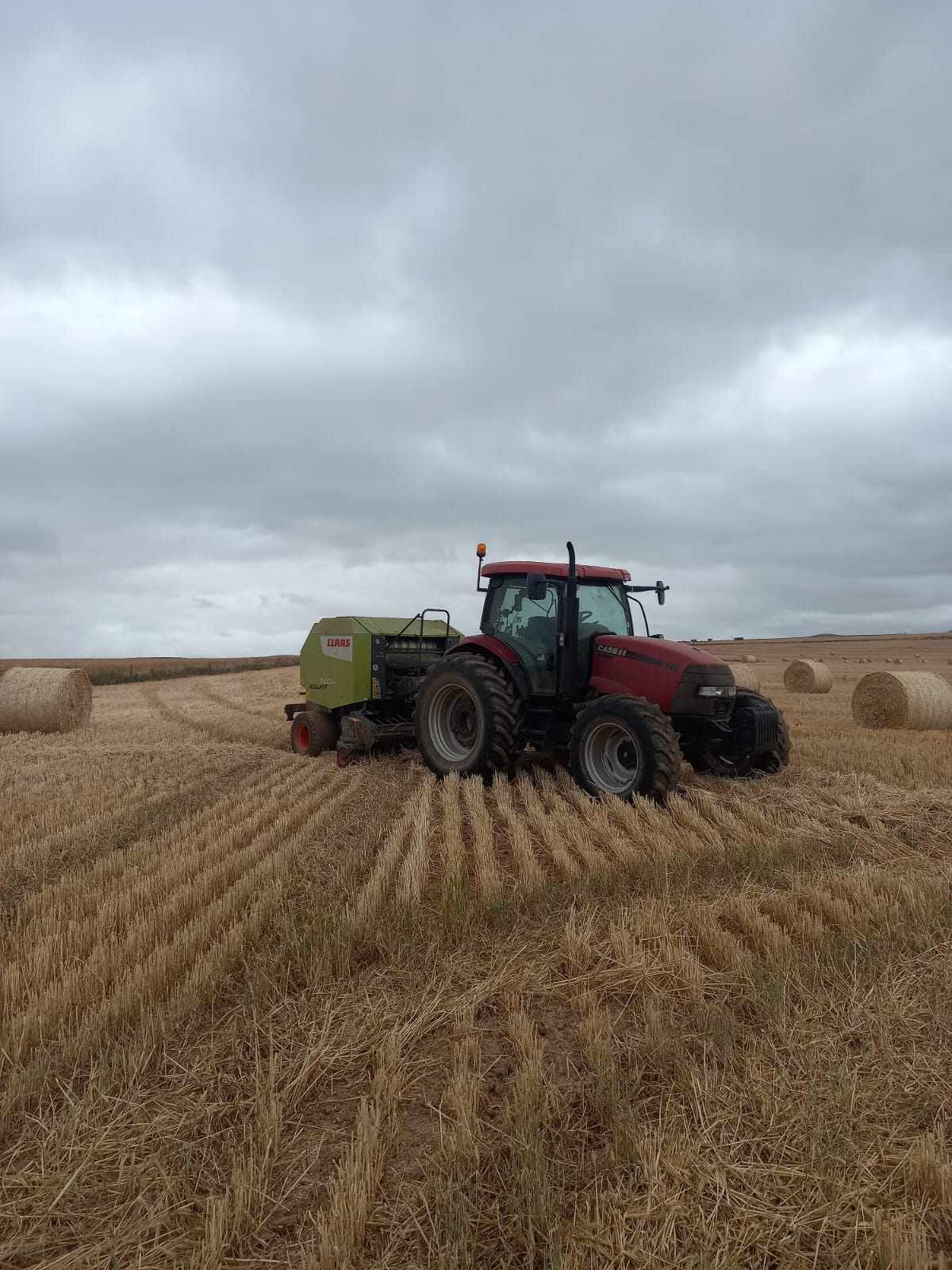
Bales for fodder. Bales for mulch. Delivered.
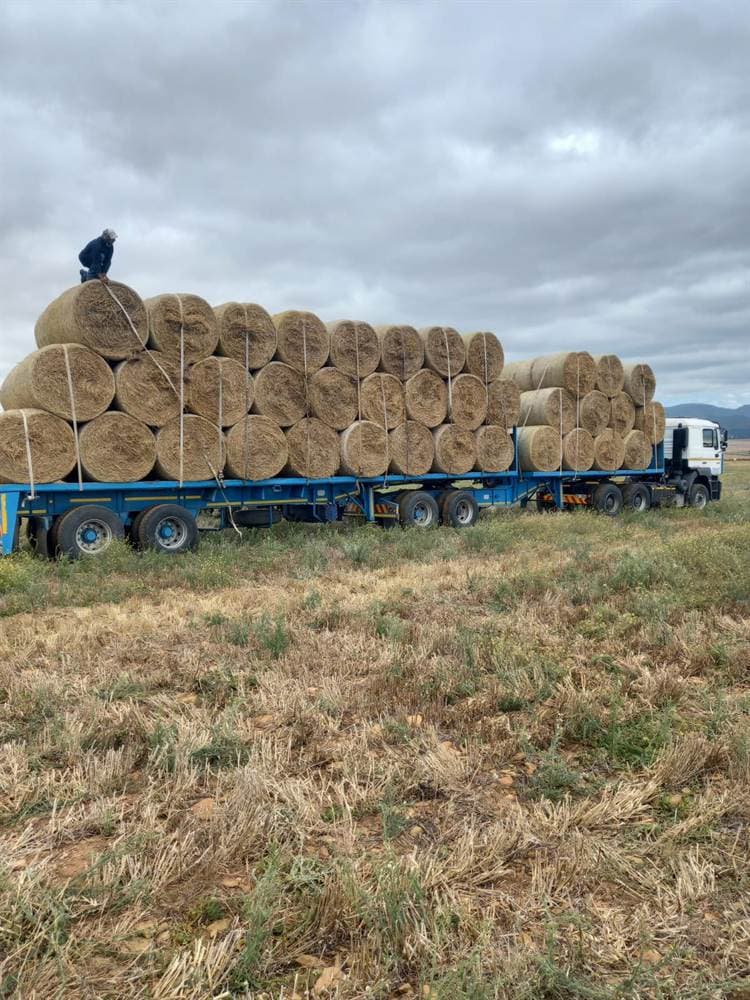
We sell round bales from our own baling work and from blocks we manage for nearby farms. Two markets we serve directly: dairy farmers buying fodder feed, and fruit and wine farmers buying mulch bales for orchard and vineyard floor coverage. Stock varies by season — call for current availability, bale type, and pricing.
Dairies in and around the Langeberg needing reliable fodder supply. Orchard and vineyard operations using hay as ground cover or mulch — moisture retention, weed suppression, and a slow nitrogen feed as it breaks down.
Bales delivered on a date you set, invoiced clean. We tell you straight what's available and what isn't — no over-promising stock we don't have.
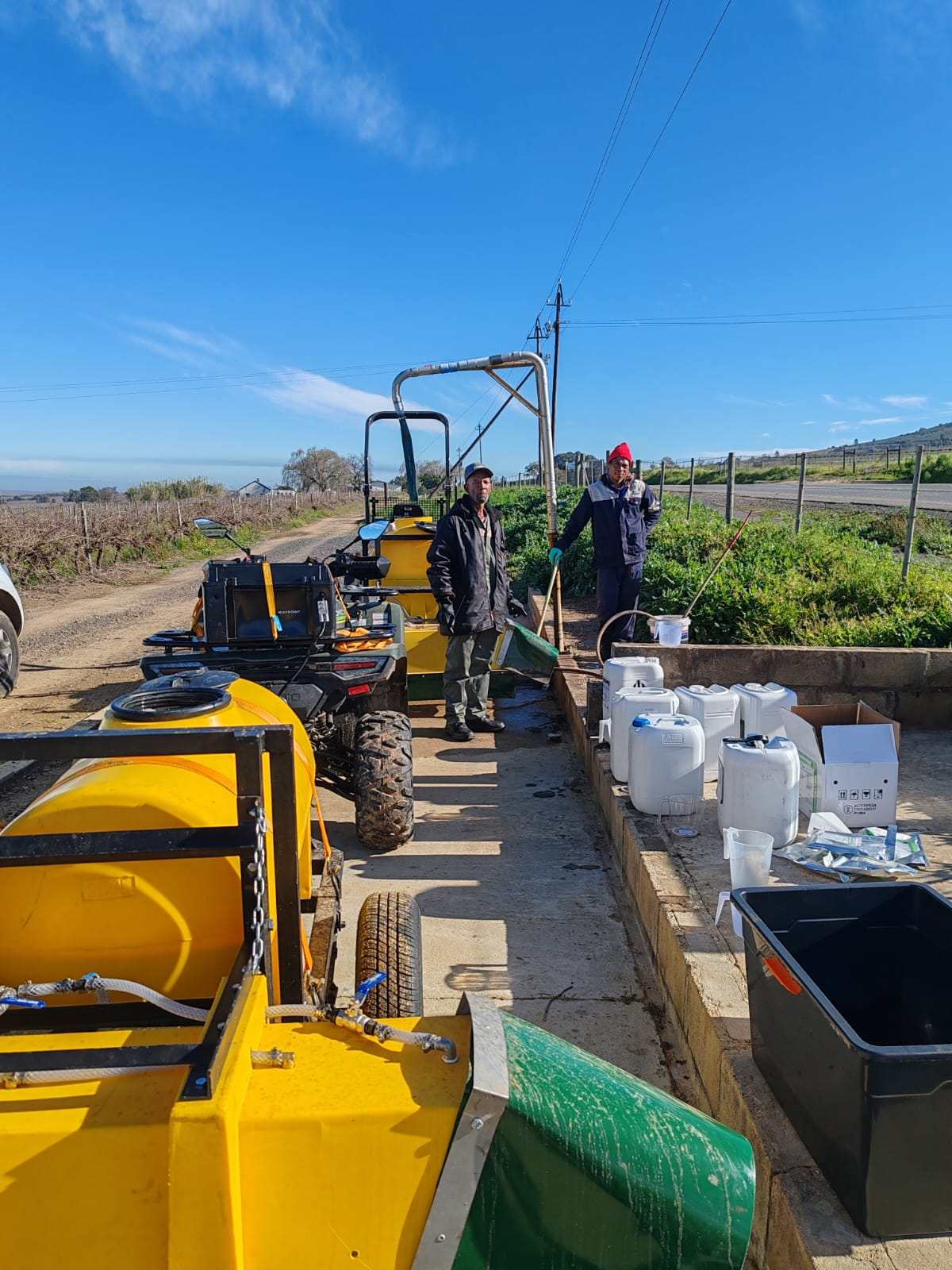
Orchards and vineyards. Calibrated, supervised, mapped per block.
We run herbicide application in your orchards and vineyards — under-row weed control, inter-row passes, or full-block work depending on your programme. Rates are calibrated against the volume you specified before we start. The tracker monitors speed, area, and coverage live, so the rate you asked for is the rate that actually goes down.
Fruit and wine farmers running their own spray programmes who need a contractor to clear a backlog, cover for downtime, or take the spraying off the team's plate during harvest. Compliance-minded operations that want a record of every application.
A per-block coverage map showing where the spray went, when, the speed, and the calculated rate. Useful for your own records, for audit, and for catching anything that needs a follow-up pass before it shows up in the rows.
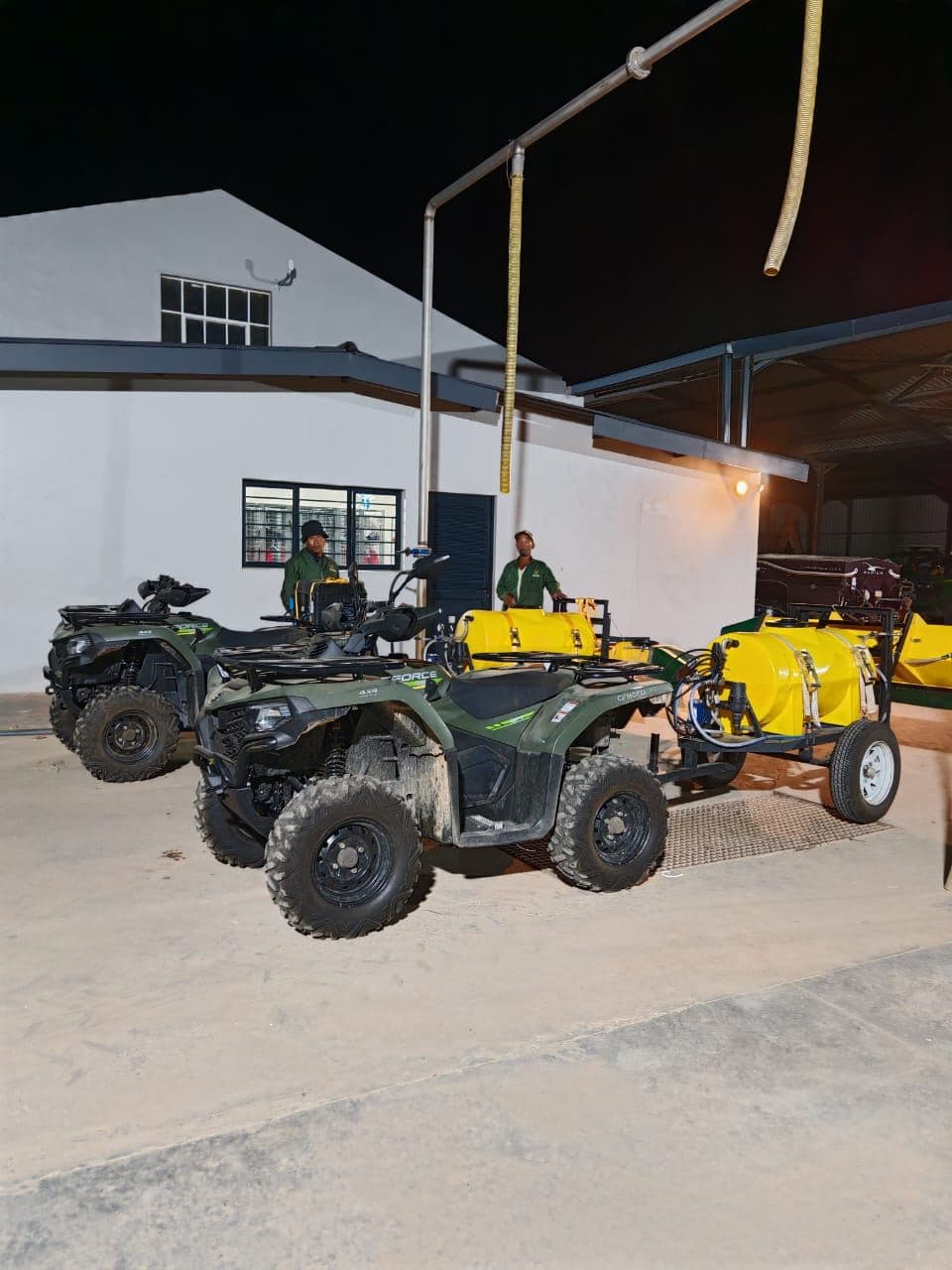
Programme spraying. The volumes your block requires. Records you can hand over.
We run ground-based fruit fly bait and cover spraying as part of your programme. Application rates are matched to the volumes your blocks require, calibrated and tracked the same way every other spraying job is. Owner on site to sign off on conditions before each run.
Fruit farmers in the Langeberg running an active fruit fly programme who need contracted ground spraying to keep the rotation tight, or to step in when their own resources are tied up in harvest.
A coverage map and rate record per block, formatted in a way you can attach to your programme records. If your buyer or auditor asks "where did you spray, when, and how much," the answer is one PDF.
Mechanical spreader. Even coverage. No missed rows.
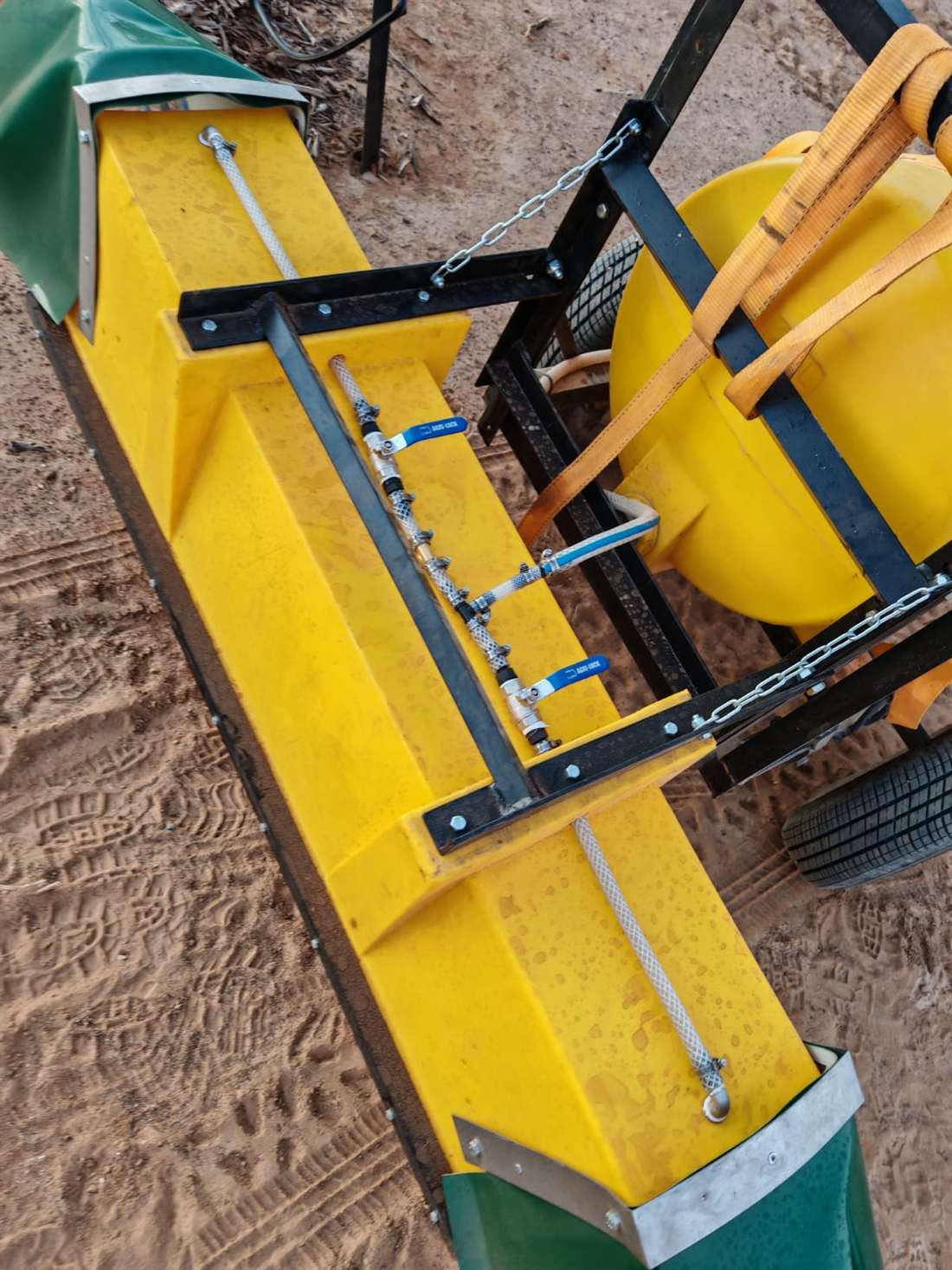
We run mechanical slug pellet spreading across orchard and vineyard floors — calibrated rate, tracked passes, and pattern checks so the bait goes down evenly across the block. No hand-broadcasting, no patchy coverage, no double-dosing the headlands.
Fruit and wine farmers dealing with slug or snail pressure on the orchard or vineyard floor — particularly where mulch and hay cover create the conditions slugs love. Farms that have tried hand-spreading and ended up with hot spots and missed sections.
A coverage map of the spread pattern with rate per hectare, useful for audit and for working out whether a follow-up pass is needed.
That's the standard. It doesn't shift between services and it doesn't shift between farms.
On site. The team works; I supervise.
GPS on every machine. Speed, area, coverage logged live.
Rate verified against the volume you asked for, before we start.
Coverage map afterwards. Day-of or end-of-week. PDF you can keep.
Pick up the phone. One call usually settles it.